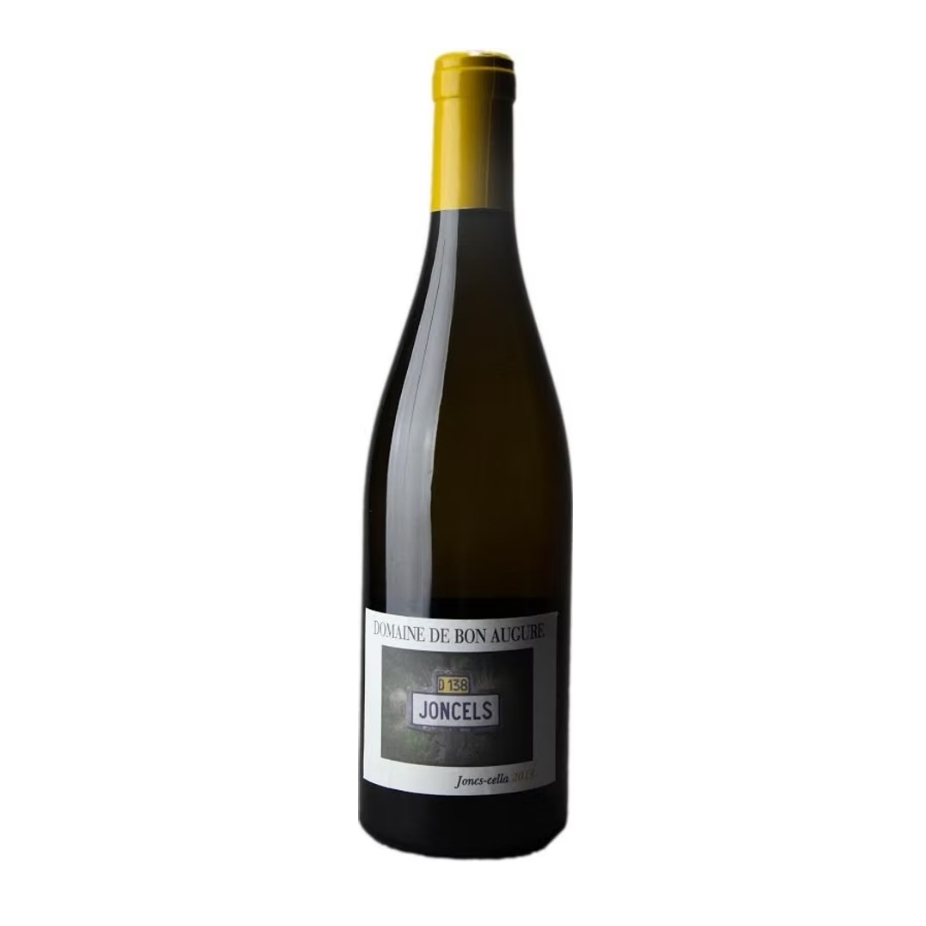
Description
No great wines without great terroirs and no great terroirs without monastic origin. The Benedictine Abbey of Saint-Pierre aux Liens de Joncels bears the Latin name Joncs-cella, meaning the source of the Reeds. The legend of its founding features Baron Isssiates, who falls in love with a young and beautiful shepherdess; she prefers to throw herself into the void rather than yield to his advances. She takes the baron with her in the fall, but by submitting to penance, he falls into a spring surrounded by reeds and comes back to life. He repents by taking holy orders and founds the monastery of Joncels near the spring. A blend of Chardonnay and Petit Manseng, it is entirely vinified in barrels. A dry white wine of great aging potential. It is a demonstration of the alchemy between wine and wood, a millennial tradition still respected through careful barrel aging.
IGP Haute-Vallée de l’Orb
Grape variety: 90% Chardonnay, 10% Petit Manseng
Soil: iron-rich clay on a limestone scree base
Vine age: 20 years
Harvest: manual
Vinification: low-pressure pneumatic pressing, active lees stirring followed by light racking
Aging: 12 months in new barrels
Production: 6,000 bottles on average per year
Producer Profile
Our adventure was born from a utopia, that of finding in Languedoc, this extraordinary region where even the ideas we think are the craziest end up coming true, the land that would give life to Chardonnays made for aging. Thus, although it took us years, spent straining our eyes over geological maps and exploring the mountains of the hinterland, our quest finally came to fruition at the same time as we discovered the forgotten vines of the old Benedictine abbey of Joncels, in the heart of the terroir of the Upper Orb Valley.
At the borders of Hérault and Aveyron, this area is in a way the Wild West of Languedoc, both its extreme point – the watershed is nearby – and its new frontier, or rather its rediscovered frontier. For if the slopes and the harshness of the climate – here we exceed 600 meters in altitude – had led our ancestors to prefer less demanding lands, we are today rediscovering all its richness, stemming from the encounter between a clay-limestone soil, a very close bedrock, and climatic conditions that ensure an exceptional temperature range between day and night.
Created in 2013, the Domaine de Bon Augure now has nearly nine hectares of vines, planted on steep hillsides by a farmer from the village of Joncels in the early 1990s. Six are in Chardonnay, a rare grape variety at such a low latitude but perfectly suited to the terroir of the Haute-Vallée de l’Orb, one in Petit Manseng and one in Pinot Noir, to which are added a few rows of Grenache Gris, Sauvignon Blanc, Chenin Blanc, and Petite Arvine.
The vine is at ease here amidst mountain landscapes. The vegetative cycle is, however, later than in the rest of Languedoc, with budburst patiently waiting for the end of the long winter and harvests not beginning until the end of September, whereas they are already finished on the plains soils.